
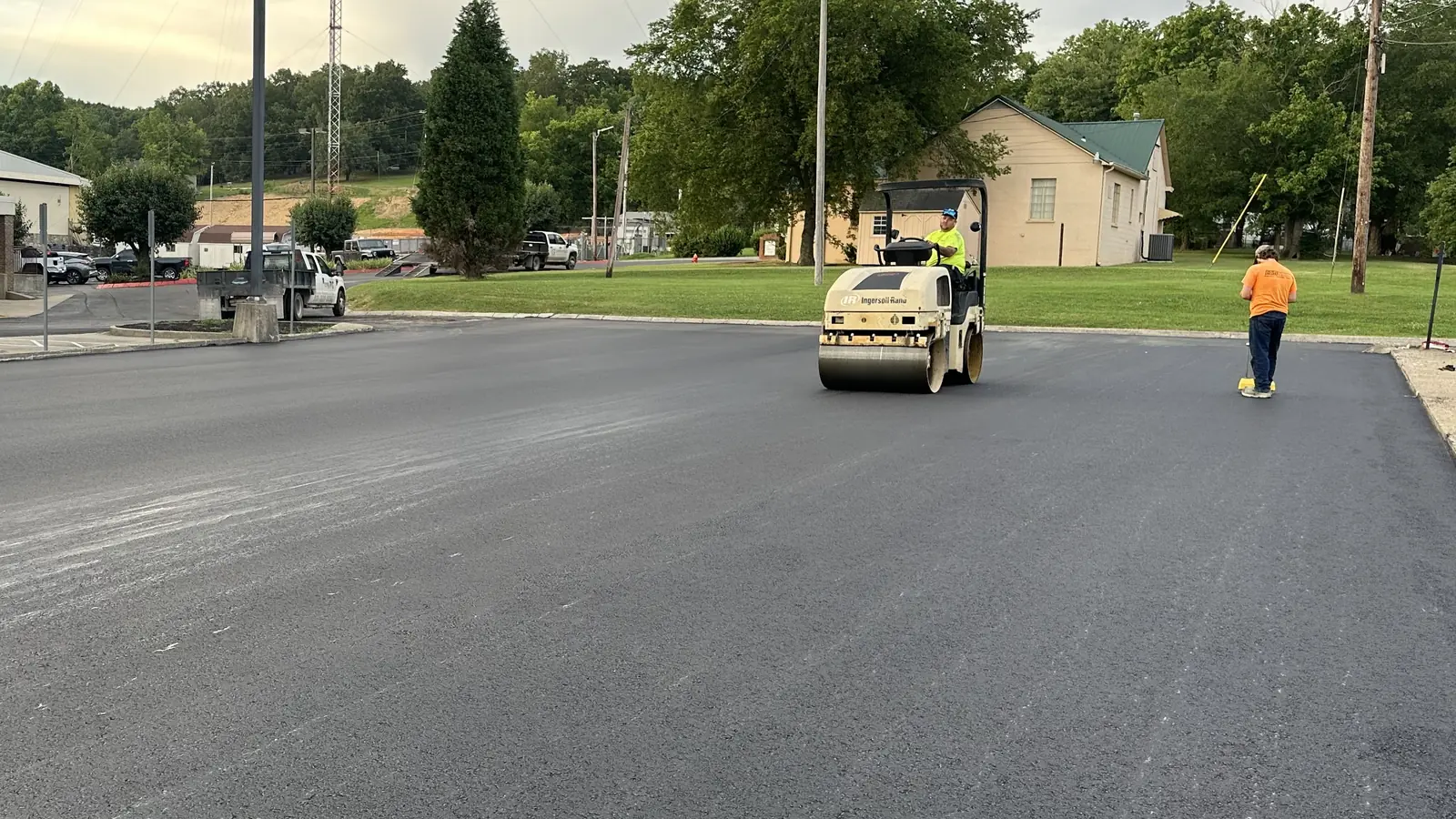
Asphalt vs Concrete Driveway: Which One Should You Choose?
For most Middle Tennessee homes, asphalt is the practical pick and concrete is the long-life pick. You can drive on new asphalt within days, and patches and crack sealing are simple fixes. Concrete lasts longer, at 30 to 40 years in a national guide. The asphalt industry’s own guide gives asphalt up to 20 years. Concrete also needs a week before cars and no salt its first winter. Published prices for the two overlap.
Greenfield Pavement Coatings builds asphalt driveways for homes across Clarksville and the Nashville area. Concrete is another trade, so this guide covers it as education, using concrete industry sources. The table below lines up the two surfaces, and the sections after it explain each row.
How do asphalt and concrete compare side by side?
The dollar figures are market numbers from national cost guides and a Nashville-area cost report. They are not our price list.
| Asphalt | Concrete | |
|---|---|---|
| Cost per square foot, installed | $6 to $9 for most jobs (national guide); $4 to $6 (Nashville-area report, 2022) | $4 to $15 (national guide) |
| Typical life | up to 20 years | 30 to 40 years |
| Upkeep | sealer every two to five years, crack filling | penetrating sealer every three to five years; no deicers the first winter |
| Cure time before driving | soon after paving; wait a few days | 7 days of curing |
| Repairs | hot mix patches, crack sealing, an overlay over a sound base | resurfacing for scaling, in a color that will not match |
What does each driveway cost up front?
A national cost guide puts a concrete driveway at $4 to $15 a square foot installed. The same guide puts whole jobs at $1,800 to $6,000. For asphalt, one national guide says most homeowners pay $6 to $9 a square foot. Another lists $7 to $15. A Nashville-area cost report put asphalt at $4 to $6 a square foot in 2022.
The ranges overlap, so the guides do not settle the price question on their own. Size, base work, thickness and tear-out move the number on either surface. For the asphalt side in detail, read what an asphalt driveway costs in Tennessee.
How long does each driveway last?
Concrete wins on paper. A national cost guide says a concrete driveway should last 30 to 40 years. The asphalt industry’s driveway guide says a well-designed asphalt drive gives up to 20 years of service. A national repair guide puts asphalt at 15 to 20 years.
Those numbers assume a sound base, good drainage and steady upkeep. Water that gets under either surface shortens its life. Here, freezing nights and slow-draining soils test that base every winter.
How do freeze and thaw nights, summer heat and clay soils treat each one?
Clarksville averages about 78 nights a year at or below freezing, by NOAA’s 1991 to 2020 normals. Water expands as it freezes, and that stress works on both surfaces.
On concrete, the damage shows up as scaling. The ready mixed concrete industry describes scaling as local flaking or peeling of the finished surface. It says deicing chemicals make scaling worse. That is why concrete groups say to skip deicers the first winter and use clean sand for traction.
On asphalt, freeze and thaw works through open cracks. A university-hosted pavement reference says crack sealant keeps water out of the pavement. Sealing cracks as they open is the job of crack sealing.
Summer brings more than 50 days a year at 90 degrees or hotter, by the same NOAA normals. Asphalt softens in that heat, so a new drive can scuff when tires turn in place. Concrete does not soften, but a new slab needs moist curing at first.
Under both surfaces, the federal soil survey maps slow-draining subsoils heavy in clay across much of the area. Water that slips under a crack or an open edge sits on that clay. Asphalt needs a firm crushed stone base, usually 6 to 8 inches by the asphalt industry’s guide. Concrete industry guidelines call for soil compacted evenly so the slab does not settle.
What upkeep does an asphalt or concrete driveway need?
The asphalt industry’s driveway guide calls for a sealer every two to five years. It says to wait until the driveway is at least several months old. A fresh coat also improves the drive’s look. Cracks get filled as they open, so sealcoating and crack filling make up the routine.
A concrete driveway skips the black coat but keeps its own list. One state concrete association’s 2025 guidelines allow a penetrating sealer 30 days after placement. They say it needs reapplying every three to five years. The ready mixed concrete industry adds two rules. Never use a deicer made with ammonium nitrate or ammonium sulfate. Hose off the salt cars track in when weather allows.
How soon can you drive on a new asphalt or concrete driveway?
New asphalt can carry a car soon after paving. The asphalt industry’s driveway guide still suggests waiting a few days. It also says to keep a heavy moving truck off a fresh mat.
Concrete takes longer. A state concrete association’s 2025 guidelines open a new driveway to traffic after 7 days of curing. A strength test can shorten that wait. Plan on a week of parking somewhere else.
Which one is easier to repair?
Asphalt is. Cracks take a hot-pour sealant, and a failed spot is cut out and patched with hot mix. A university-hosted pavement reference says hot mix is the usual material for long-term patches. When the surface wears thin over a sound base, the asphalt guide calls for a 1.5 to 2 inch overlay. Those fixes are asphalt repair and asphalt resurfacing.
Concrete repairs are harder to hide. The ready mixed concrete industry says light to moderate scaling can be resurfaced. It also says the repair material will not match the color of the original concrete. When scaling keeps spreading, the same guide says repair may not be feasible.
Which driveway fits your home?
Pick asphalt if you want to park on the new drive within days and keep repairs simple. It suits an owner who will reseal every few years and fill cracks as they open. It is black, and a fresh sealer coat improves its look. For a long rural drive or a farm lane, compare tar and chip with asphalt too.
Pick concrete if the longest life matters most and you can keep salt off it the first winter. It suits an owner who can wait a week to drive on it and live with repairs that show. It is light gray, and some sealers darken it. A concrete driveway is another trade, so that quote comes from a concrete contractor.
Ready to price an asphalt driveway?
Greenfield Pavement builds new asphalt driveways and full replacements across Clarksville and the Nashville area. We pave with our own pavers. We look at the job and put the quote in writing. Call or text (931) 362-7283 with the size of the drive and what sits there now.